Thermal Optics in Long-Range Shooting
Tactical Necessity or Overpriced Hype?
The market is full of optics that say they can make it look like daytime even at night. Companies make promises and charge a lot of money for these things.. Do these thermal optics really work for someone who shoots a lot or are you just paying for the advertising? The answer depends on how thermal optics work how they are made and what you want to shoot with your optics.
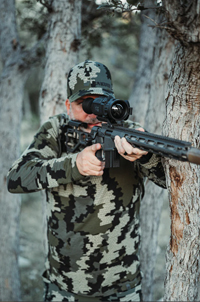 The Physics of Thermal Processing and Target Identification The Physics of Thermal Processing and Target Identification
Thermal optics performance starts with sensor specs. Ignore the branding and read the data sheet.
The NETD sensor rating measures thermal sensitivity. It tells you the smallest temperature difference the sensor can detect. Lower numbers are better. A sub-20mK NETD sensor resolves fine heat contrast. A 50mK unit struggles in humid air or light rain, where thermal signatures wash out fast.
Micron pitch defines pixel size on the sensor. A 12µm pitch packs more pixels into the same core than a 17µm pitch. More pixels mean sharper edges and cleaner detail at distance. The 17µm sensors still work, but they lose definition faster as range grows.
Refresh rate controls how smoothly the image tracks motion. A 50Hz or 60Hz rate holds a stable picture as you pan or as an animal runs. A 30Hz unit smears and lags. That lag ruins fast shots.
Here is the trap. Detection is not identification. You can pick up a hot blob at 500 yards with almost any long range thermal rifle scope. That blob tells you nothing. Nighttime target identification requires enough pixel density to confirm what you see. Is it a coyote or a neighbor's dog? A hog or a fence post holding daytime heat? Without a positive ID, you do not pull the trigger. Detection range means nothing. Identification range is the only number that matters.
Recoil, Zero Retention, and Battery Liabilities
A thermal scope must survive the rifle it sits on. Zero retention is the first mechanical test. If the unit shifts point of impact after three rounds of .308 WIN or .300 WM, it is useless. Recoil impulse hammers the internal electronics and the mounting interface with every shot. Cheap units drift. Good units hold zero across hundreds of rounds and multiple mounting cycles.
Weight compounds the problem. Thermal units are heavy. That mass, mounted high on a rail, magnifies stress under recoil. Undersized rings and weak rails let the optic walk. Use a solid one-piece mount rated for the load, and torque it to spec.
Battery life is the main weakness of every digital optic. Cold weather makes it worse. This is the cruel part. Thermal contrast peaks in cold conditions, because the gap between a warm animal and cold ground is largest. That is exactly when lithium cells drain fastest. Plan for it. Carry spares in an inside pocket. Know your real runtime, not the spec-sheet number measured at room temperature.
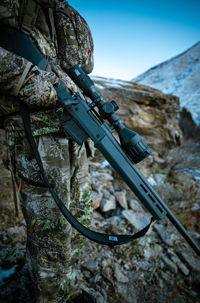 Pushing the Distance:
When Digital Optics match ballistic capabilities Pushing the Distance:
When Digital Optics match ballistic capabilities
Shooting past 300 yards at night changes every requirement. Thermal imaging ballistics only works when the optic can resolve the target and support a precise hold at range.
Base magnification is the deciding factor. This is true optical or native sensor magnification. Digital zoom is not the same thing. Digital zoom crops and enlarges existing pixels. It adds no new detail. Push digital zoom past 2x and the image pixelates into a blocky mess. You cannot place a precise shot on a smeared target.
For long shots, you need a sensor with enough native resolution and enough base magnification to hold detail at distance. Entry-level cores cannot support the sight picture required to apply drop and windage at 400 or 500 yards. Match the optic's core resolution and base magnification to your ballistic data. If the numbers do not line up, the shot is not ethical.
The Verdict: Evaluating the ROI for Shooters
Who needs a thermal scope? Predator hunting at night justifies the cost. Coyotes and other predators move after dark, and thermal finds them fast. Feral hog eradication is the strongest case. Hogs are nocturnal, destructive, and legal to shoot around the clock in many states. Tactical and security applications round out the list.
Who is wasting money? Range-only shooters gain nothing. Anyone shooting under 100 yards can use cheaper night-vision or a good light. If you do not hunt at night, skip it.
Buy thermal for a mission, not for the spec sheet. Match the sensor and magnification to your real shooting distance. Then hold zero and keep spare batteries warm.
|

